Protactinium
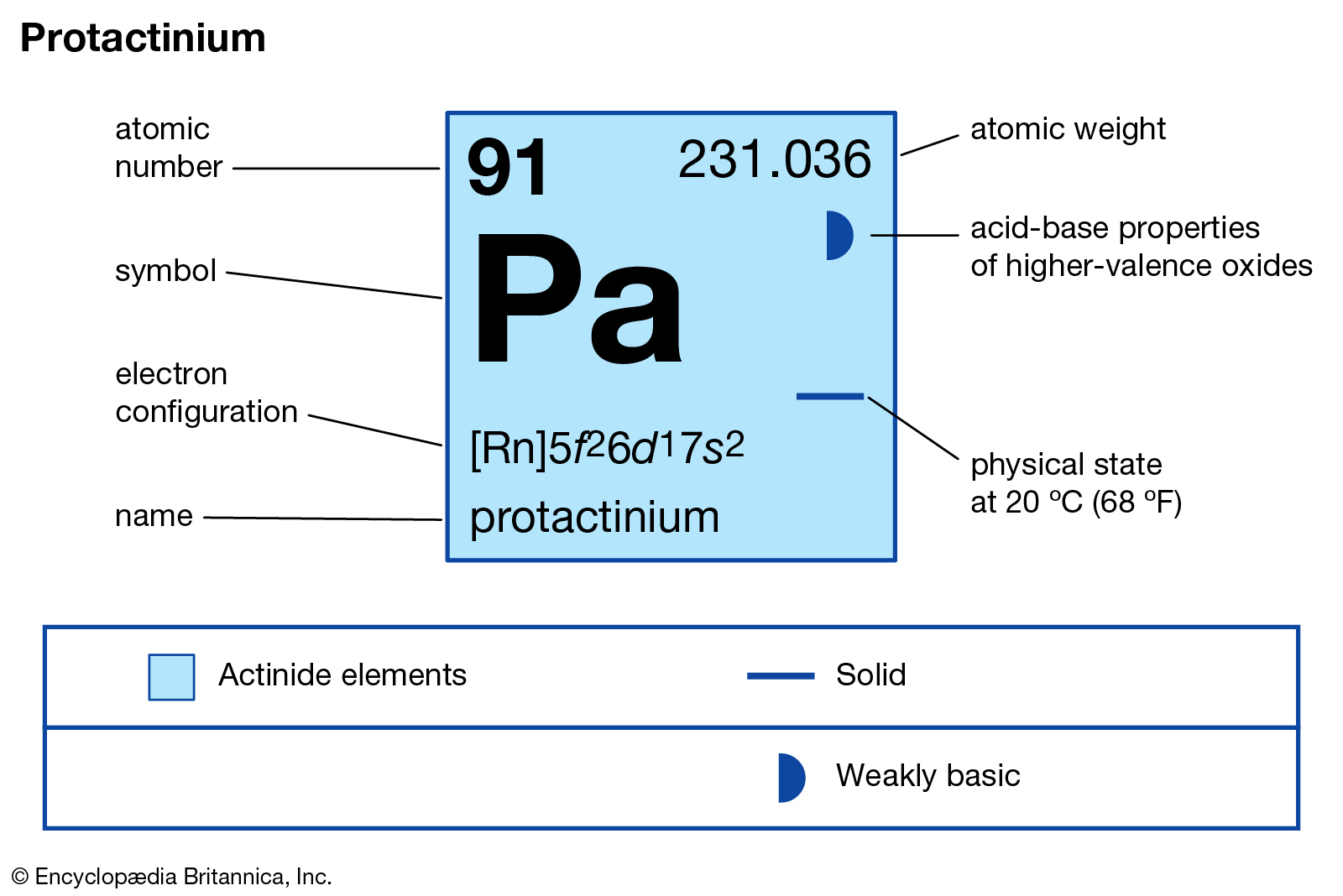
Atomic Number: 91
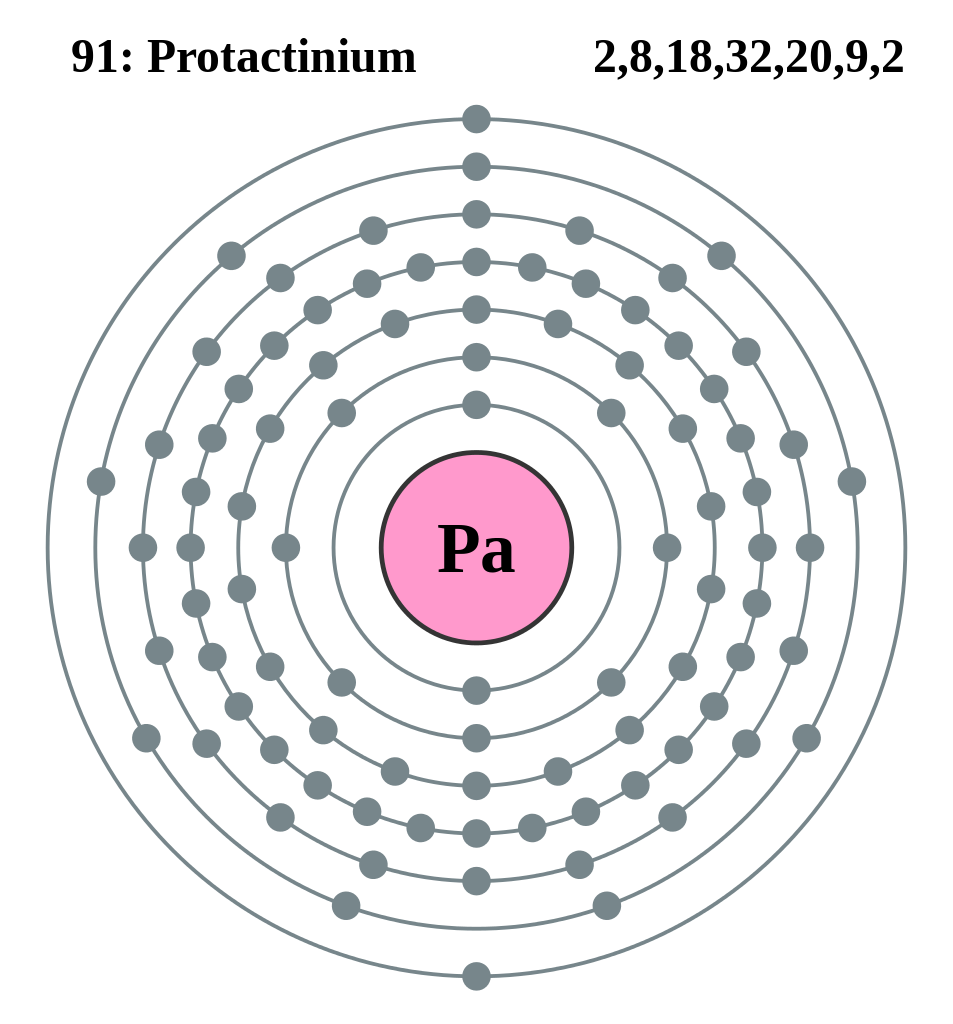
Protactinium is the 91st element in the periodic table and it is part of the actinide series. It is a dense, silvery-gray metal which reacts heavily with oxygen, and water vapor. It is a radioactive metal which overall is mostly just used for research purposes. It is one of the most reactive metals in the periodic table, and it is an alpha emitter (releases alpha particles). Protactinium is a natural occuring metal and is extremely rare. It is estimated to be found around a few parts per trillion in the earths crust. Mostly all of the protactinium found is protactinium-231. This element was discovered in 1918 by two groups of scientists, Otto Hahn and Lise Meitner of Germany and Frederick Soddy and John Cranston of Great Britain. Though, protactinium was first isolated by Aristid V. Grosse in 1934. |
|