Bismuth
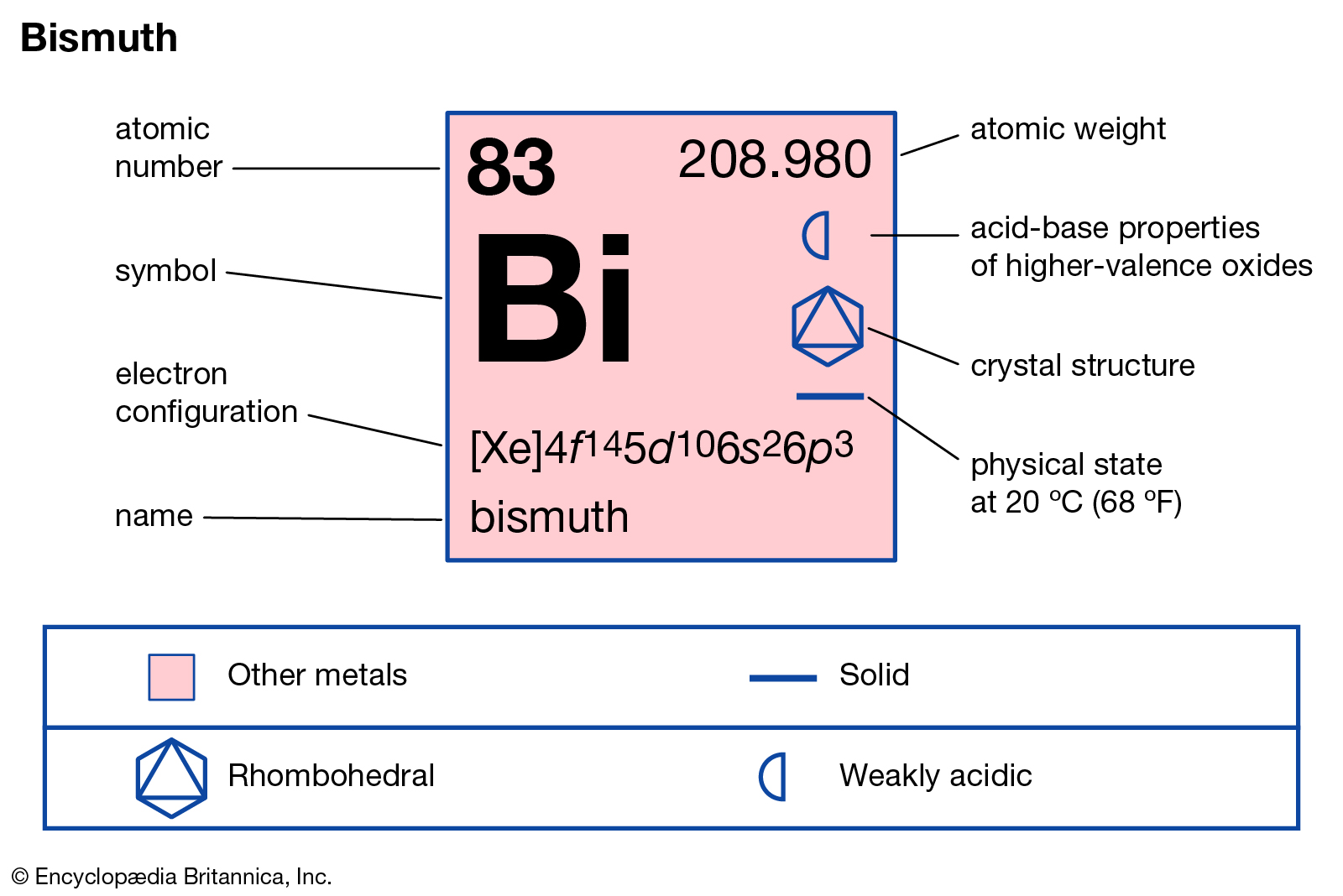
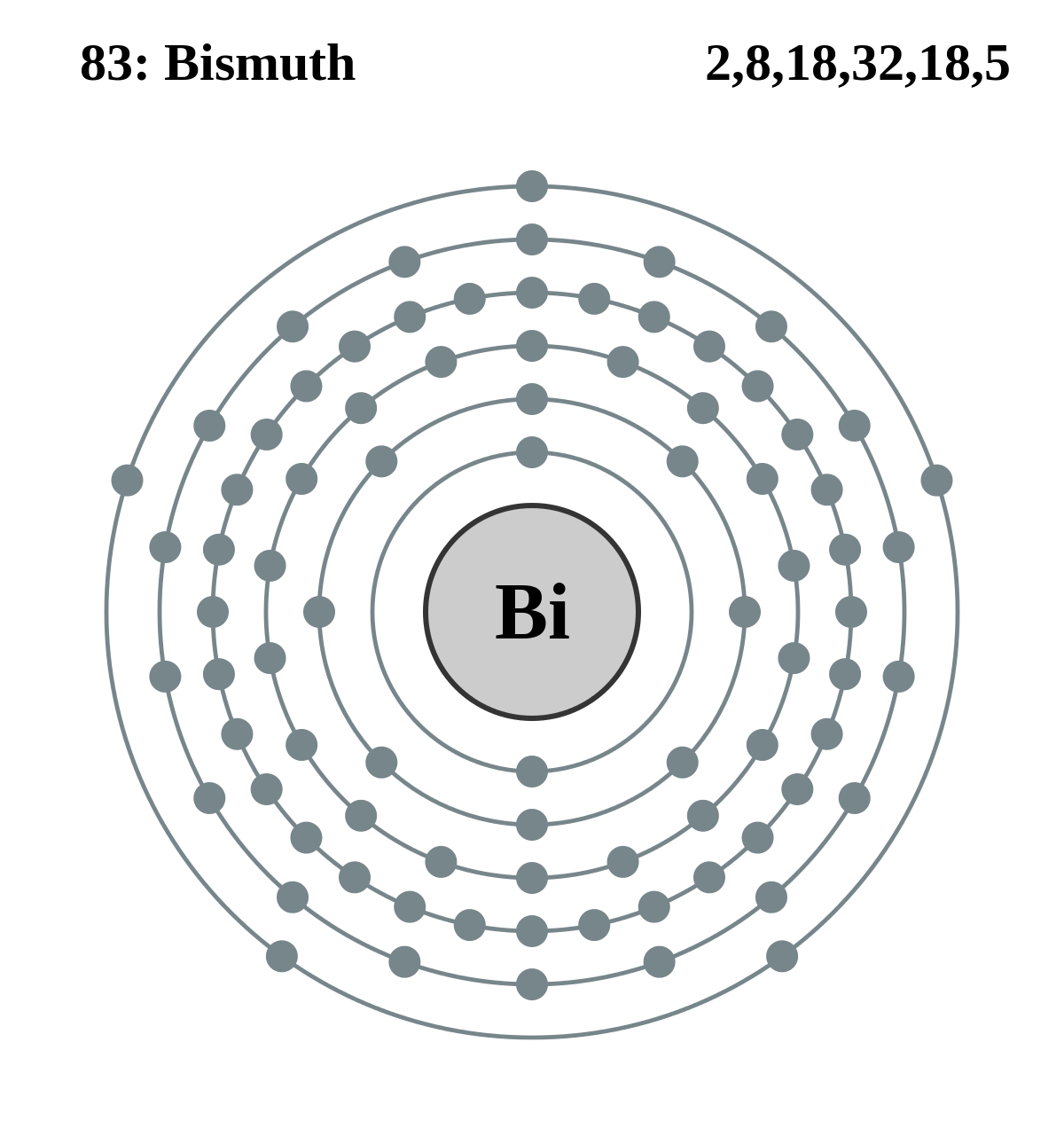
Atomic Number: 83
Bismuth is the 83rd element in the periodic table and it is one of the post-transition metals. Bismuth is a brittle, crystalline, white metal with a slight pink color. It is one of the pnictogens (try pronouncing that) which is group 15. This group consists of nitrogen, phosphorus, arsenic, antimony, bismuth, and moscovium. Chemically it is similar to arsenic and antimony. This element's most popular use is the main ingredient of Pepto-Bismol, a stomach ache medicine. Bismuth is found in the ground by mining, but it is not easy to find. It is obtained as a by-product in refining lead, copper, tin, silver, and gold. These mines are mostly found in Bolivia, Peru, Japan, Mexico, and Canada. Claude Geoffroy Junine, a french chemist, discovered bismuth in 1753. |
|