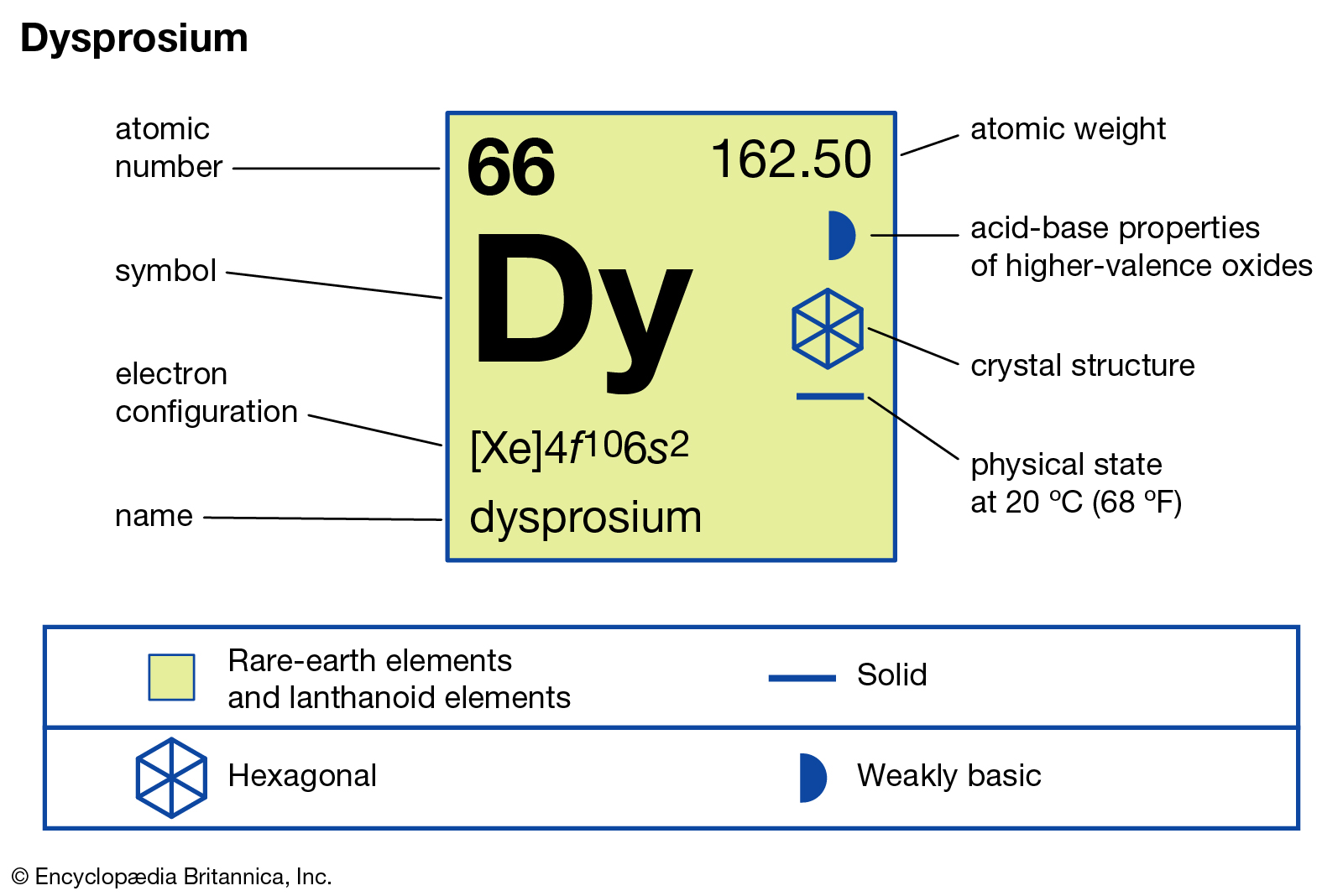
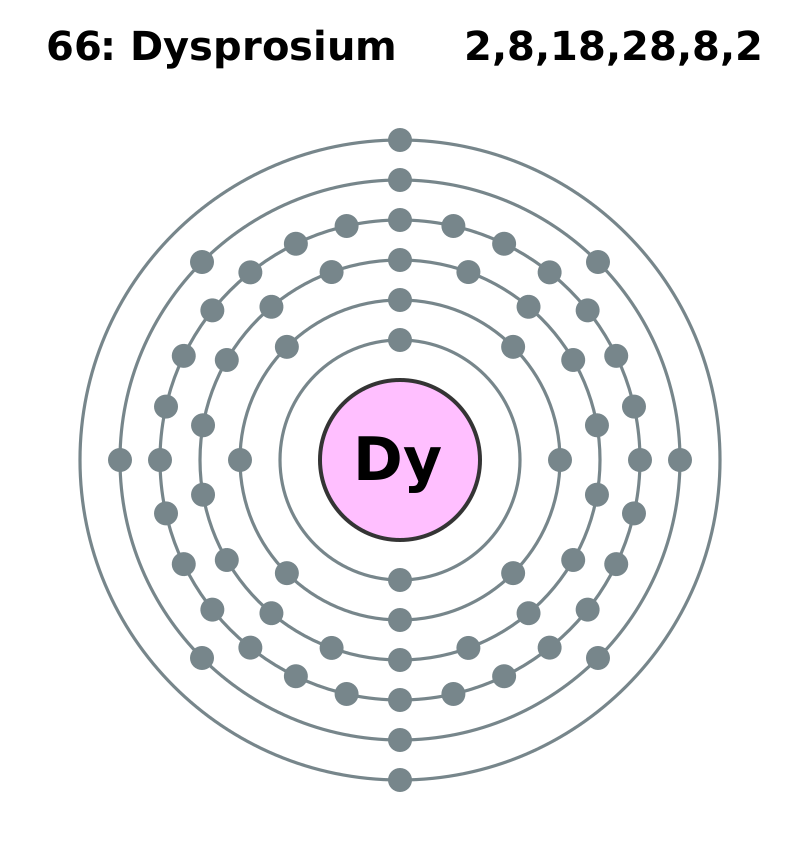
Dysprosium
Atomic Number: 66
Dysprosium is the 65th element in the periodic table and it is part of the lanthanide series. It is a rare-earth element with a metallic silver look. It tarnishes slowly in air at room temperature and it dissolves easily in acids. Dysprosium is considered to be moderately toxic. Dysprosium has 12 known isotopes ranging from Dy-154 to Dy-166 and 7 of them are stable. Dysprosium is also used in phones and gives it the ability to vibrate. This element is mined from under the ground and is found in the minerals such as monazite and bastnaesite. It can also be found in smaller traces in minerals such as xenotime and fergusonite. These ores and minerals are mined in USA, China Russia, Australia, and India. Dysprosium was discovered in 1886 by Paul-Émile Lecoq de Boisbaudran in Paris. Paul-Émile Lecoq de Boisbaudran seperated dysprosium from it's oxide and therefore derived it from the greek word "dysprositos" meaning "hard to obtain".
|
|