Iodine

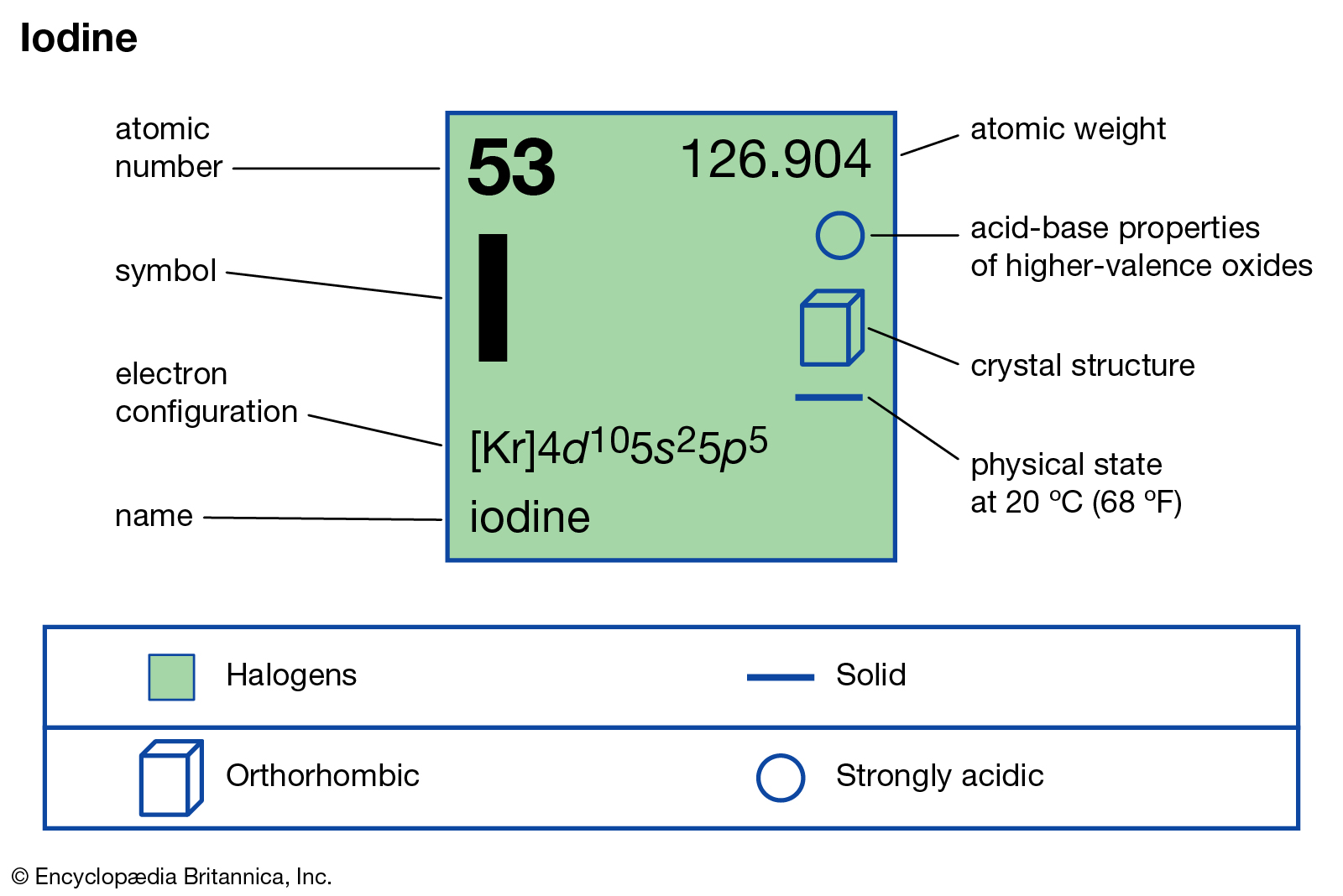
Atomic Number: 53
Symbol: I
Atomic Mass: 126.90 u
Number of Neutrons: 78
Melting Point: 113.7°C
Boiling Point: 184.3°C
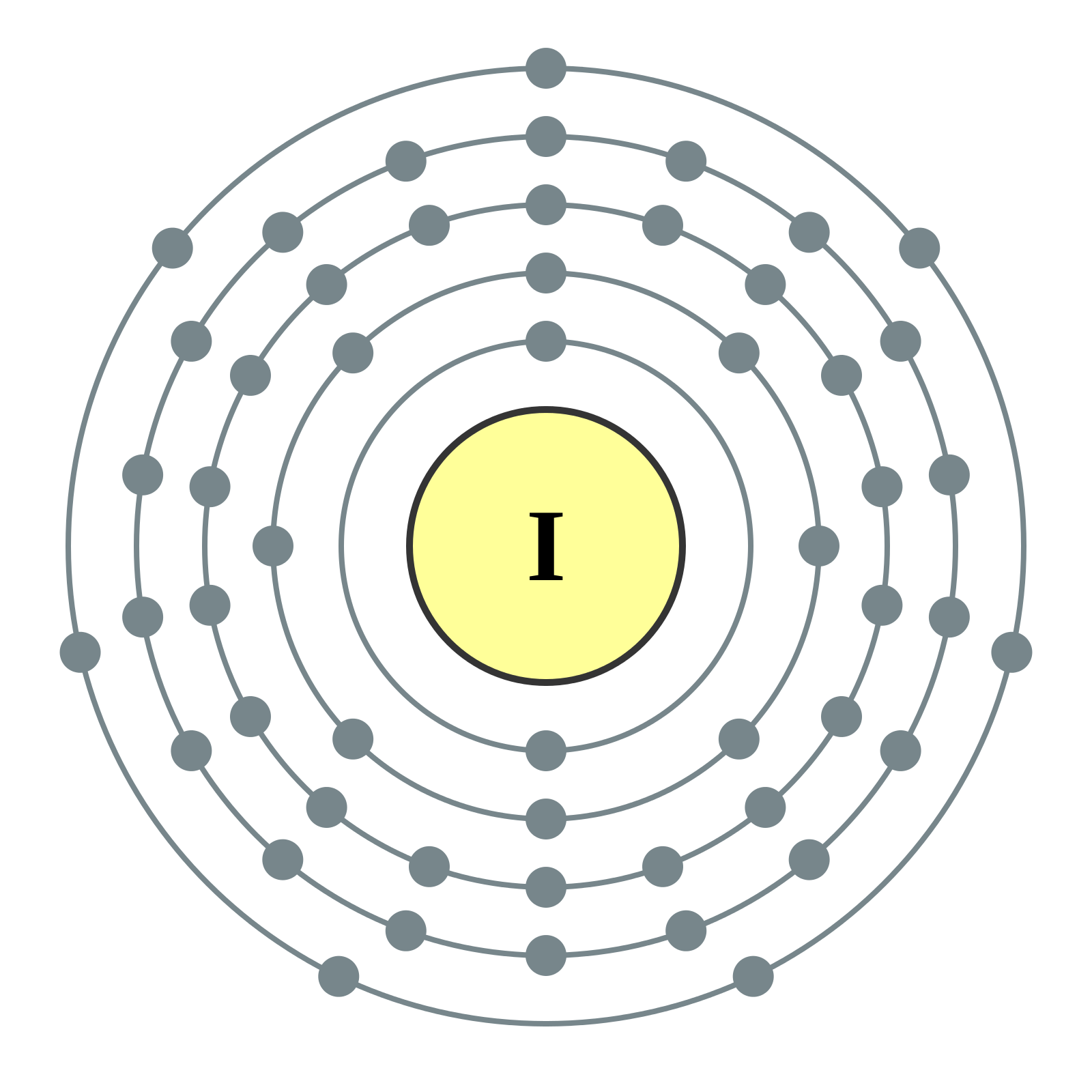
Electrons per shell: 2.8.18.18.7
Electron configuration: [Kr] 4d10 5s2 5p5


Iodine is the 53rd element in the periodic table and it is a reactive non-metal. It is part of the halogens group and is the heaviest stable element in the group. It has a purple-black color and is a non-metallic solid at room temperature. Iodine is a type of mineral that's never naturally found in the earth's soil and ocean waters. It is never found in nature uncombined. Most of the iodine found is iodine-127, the most stable one. This element is often used as disinfectant, printing ink, and dyes. Iodine was discovered by Barnard Courtois, a French chemist, in 1811. He found iodine by extracting potassium and sodium from seaweed, which is one of the foods that contains a bunch of iodine.

Previous Element  Next Element

References

Schneider, Stefan. “Iodine.” Encyclopædia Britannica, Encyclopædia Britannica, Inc., www.britannica.com/science/iodine.

“Iodine.” Wikipedia, Wikimedia Foundation, 9 Jan. 2021, en.wikipedia.org/wiki/Iodine.

“Iodine - Element Information, Properties and Uses: Periodic Table.” Iodine - Element Information, Properties and Uses | Periodic Table, www.rsc.org/periodic-table/element/53/iodine.

“File:Electron_shell_053_Iodine_-_no_label.Svg.” Wikimedia, 12 Sept. 2020, commons.wikimedia.org/wiki/File:Electron_shell_053_Iodine_-_no_label.svg.