Antimony

Atomic Number: 51
Symbol: Sb
Atomic Mass: 121.76 u
Number of Neutrons: 71
Melting Point: 630.6°C
Boiling Point: 1597°C
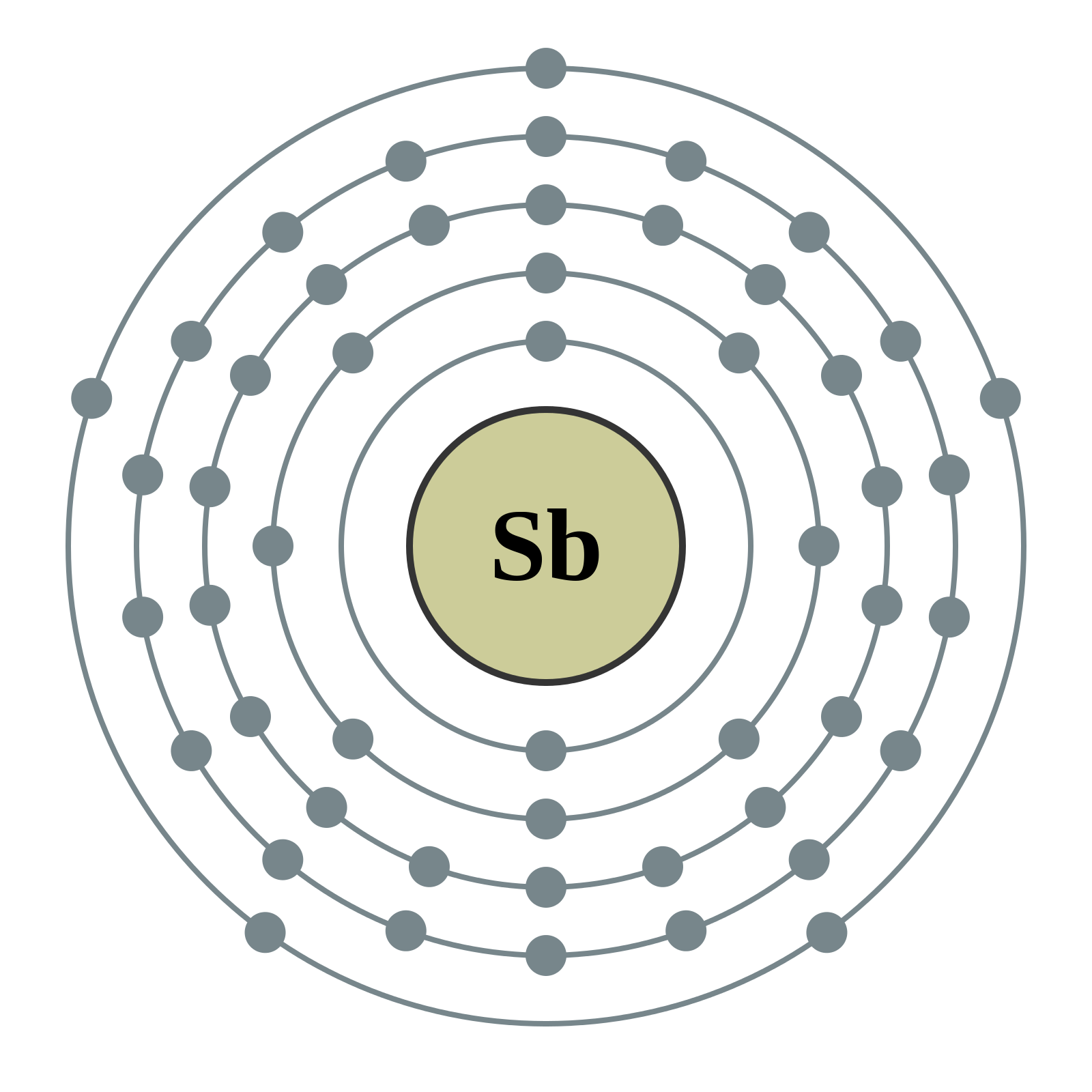
Electrons per shell: 2.8.18.18.5
Electron configuration: [Kr] 4d10 5s2 5p3


Antimony is the 51st element in the periodic table and it is a metalliod. In it's solid state it can be silvery, hard and brittle. Though, it is a very weak conductor of heat. Antimony is often used in the electronics industry to make semiconductor devices. It is also used in alloys often with lead or other metals to improve their hardness. Antimony is found under the ground in minerals and ores such as, stibnite. Most antimony is found in this ore. It is mined in China, Bolivia, South Africa and Mexico. China produces 88% of the world's antimony. Nicolas Lémery, a French chemist, was the first person to discover this element in 1707. It was actually used/known since the ancient times around the time of 3000 BC. The symbol Sb comes from it's old name, stibium.

Previous Element  Next Element

References

“Antimony.” Wikipedia, Wikimedia Foundation, 9 Jan. 2021, en.wikipedia.org/wiki/Antimony.

“Antimony - Element Information, Properties and Uses: Periodic Table.” Antimony - Element Information, Properties and Uses | Periodic Table, www.rsc.org/periodic-table/element/51/antimony.

“Antimony.” Encyclopædia Britannica, Encyclopædia Britannica, Inc., www.britannica.com/science/antimony.

“File:Electron_shell_051_Antimony_-_no_label.Svg.” Wikimedia, 12 Sept. 2020, commons.wikimedia.org/wiki/File:Electron_shell_051_Antimony_-_no_label.svg.

Anne Marie Helmenstine, Ph.D. “Get the Facts About the Element Antimony.” ThoughtCo, www.thoughtco.com/antimony-element-facts-606498.