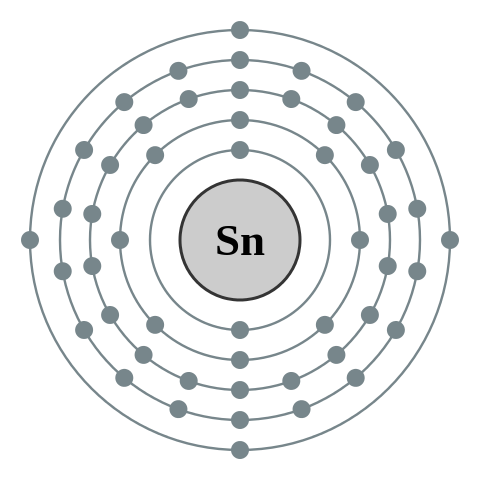
Tin
Atomic Number: 50
Tin is the 50th element in the periodic table and it is a post-transition metal. This element is a silvery metal that actually has a faint yellow color. Tin and indium are quite alike because both of them are very soft, soft enough to be cut through without much force. It is also resists corrosion which is helpful in alloys. Tin is used in steel cans used as food containers. Most of the world's tin is found in the 'tin belt' stretching through China, Thailand and Indonesia. Tin is found in it's most popular ore, cassiterite (tin(IV) oxide). Though, tin is relatively rare, making up only about 2 parts per million of the Earth's crust. Tin does not have a certain person that discovered it as it was used in the Bronze Age which begun in about 3000 BC. The symbol "Sn" comes from the Latin word for tin, "stannum."
|
|