Cadmium
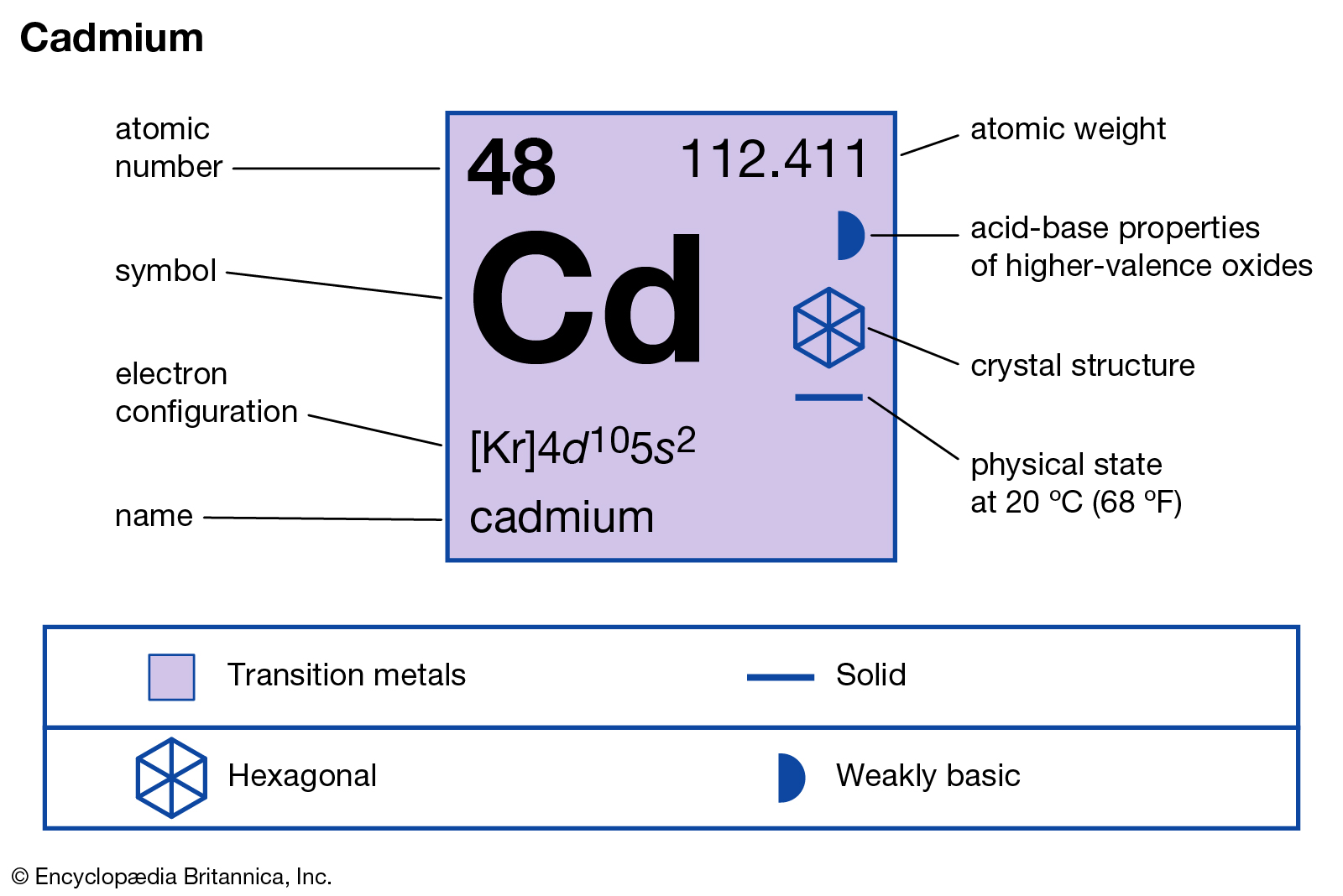
Atomic Number: 48
Cadmium is the 48th element in the periodic table and it is the last transition metal in row 5. It is a soft, silvery-white metal that is chemically similar to other metals in group 12, these include, zinc and mercury. Though, this element can be toxic with some elements. Cadmium is used often in nickel-cadmium (Ni-Cd) rechargeable batteries. It is also used in alloys against corrosion. Cadmium is found in the earths crust, often found with zinc in an ore called sphalerite (ZnS). Cadmium is mostly a by-product of zinc, lead and copper extraction. This element can be mined in many places such as Colorado, Illinois, Missouri, Washington and Utah, as well as Bolivia, Guatemala, Hungary and Kazakhstan. Cadmium was discovered by a physician, Friedrich Stromeyer in 1817.
|
|