Strontium

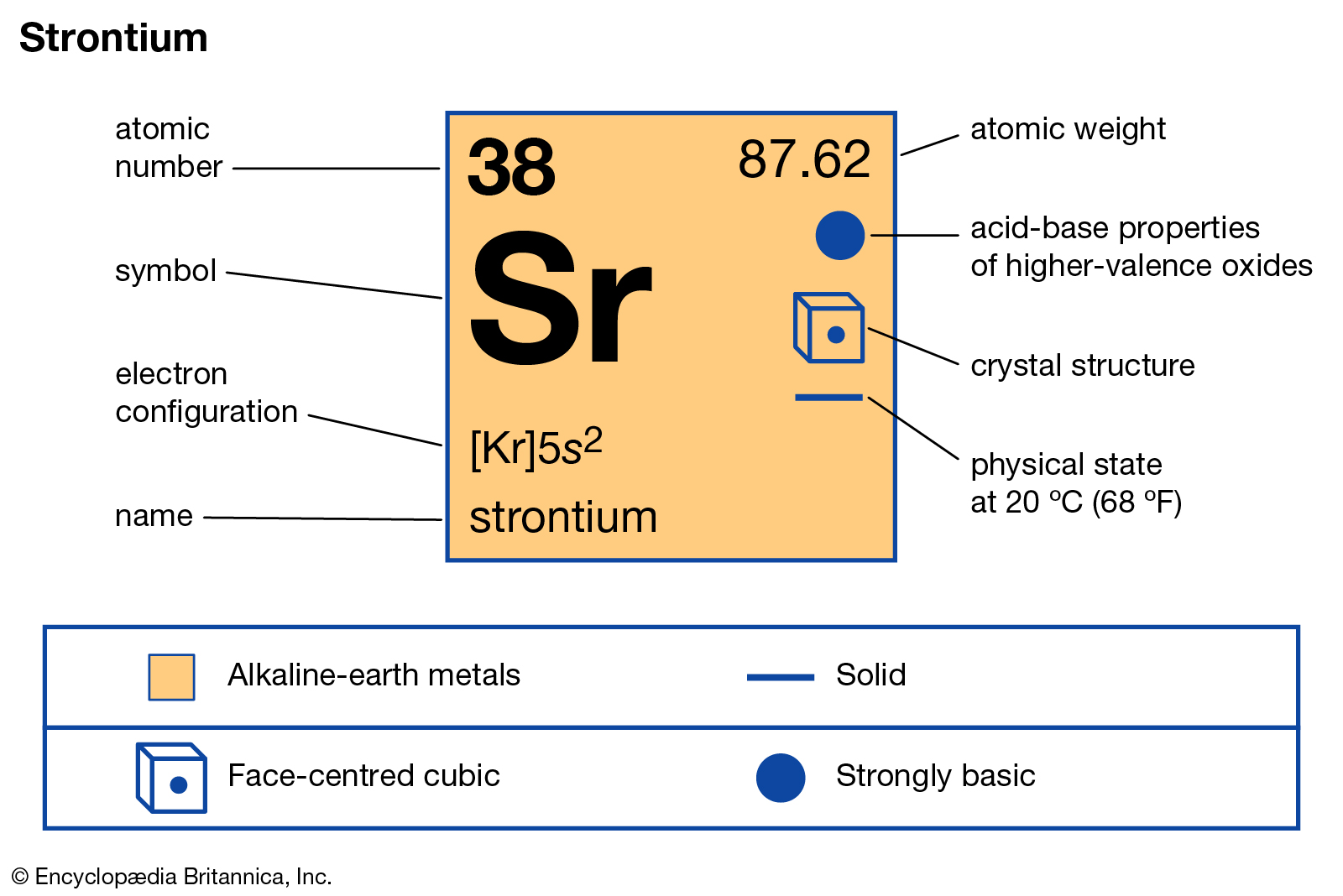
Atomic Number: 38
Symbol: Sr
Atomic Mass: 87.62 u
Number of Neutrons: 50
Melting Point: 777°C
Boiling Point: 1382°C
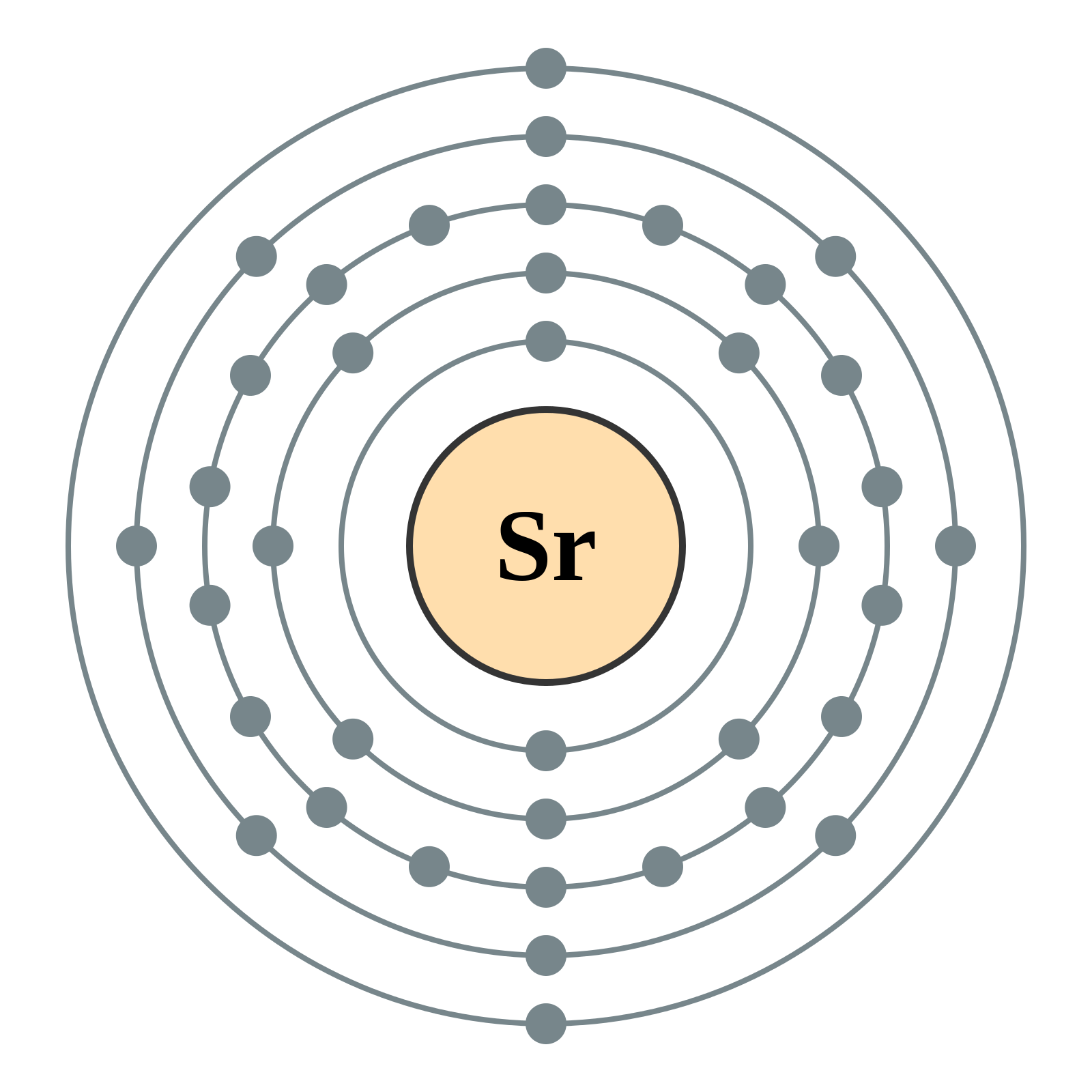
Electrons per shell: 2.8.18.8.2
Electron configuration: [Kr] 5s2


Strontium is the 38th element in the periodic table and it is part of the alkali earth metals. It is a soft silver-white yellowish metallic element, which is chemically reactive. This element is used often to make fireworks and flares. It reacts, like most other alkaline-earth metals, with air. When exposed to air is burns bright red. Strontium is found in minerals such celestite (SrSO4) and strontianite (SrCO3). China is the leading producer of these minerals, by treating them with hydrochloric acid to get pure strontium. Strontium is the 15th most abundant element in the world. The person that discovered strontium is Adair Crawford, an Irish chemist, in 1790. Sir Humphry Davy was the first to isolate this element. Strontium got its name after a small town in Scotland, Strontian.

Previous Element  Next Element

References

“Strontium.” Wikipedia, Wikimedia Foundation, 11 Jan. 2021, en.wikipedia.org/wiki/Strontium.

“Strontium - Element Information, Properties and Uses: Periodic Table.” Strontium - Element Information, Properties and Uses | Periodic Table, www.rsc.org/periodic-table/element/38/strontium.

Hanusa, Timothy. “Strontium.” Encyclopædia Britannica, Encyclopædia Britannica, Inc., www.britannica.com/science/strontium.

File:Electron_shell_038_Strontium_-_no_label.Svg. 12 Sept. 2020, commons.wikimedia.org/wiki/File:Electron_shell_038_Strontium_-_no_label.svg.

Pedersen, Traci. “Facts About Strontium.” Live Science, 20 May 2013, www.livescience.com/34522-strontium.html.