Rubidium
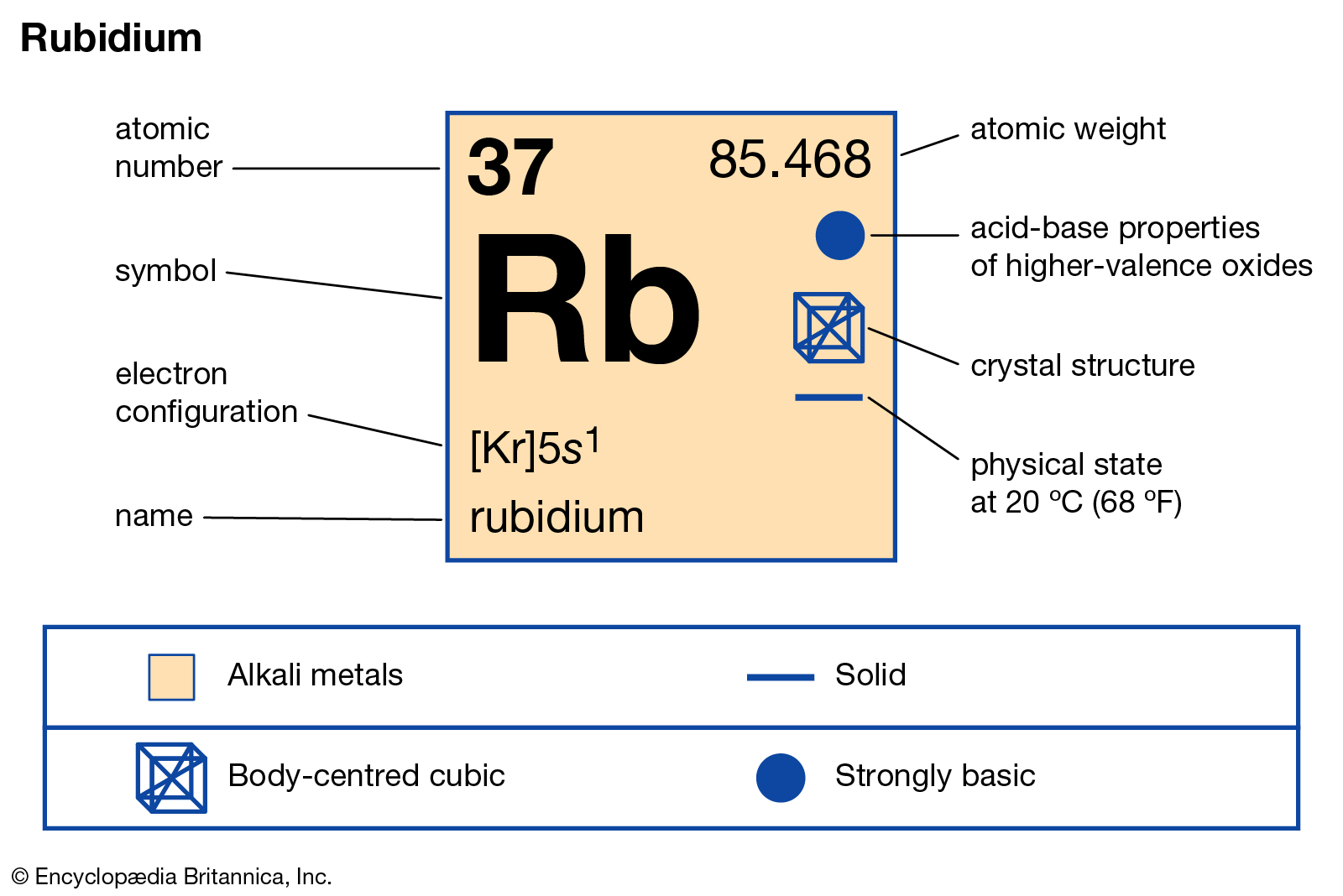
Atomic Number: 37
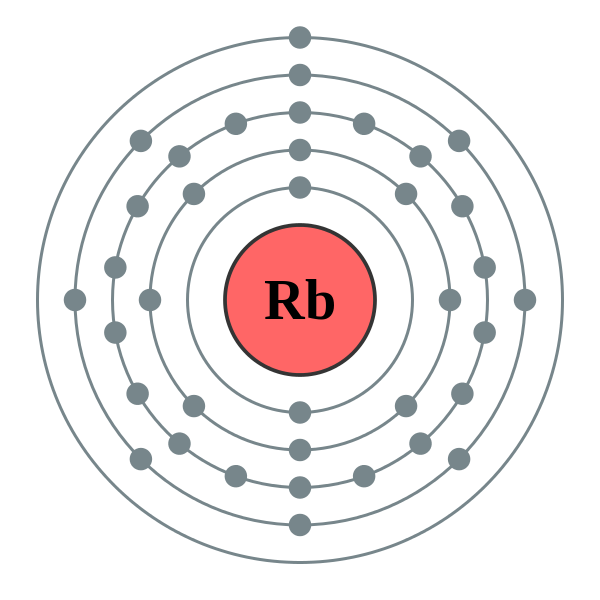
Rubidium is the 37th element in the periodic table and it is an alkali metal. It is a silvery-white soft conductive metal and has similar properties to potassium metal and caesium metal. Rubidium is relitively rare, it is the 16th most abundant element in the earths crust. This element is present in some minerals such as lepidolite, biotite, feldspar, and carnallite (often found with potassium) which contain as much as 1% rubidium oxide. These minerals are mostly found in North America, South Africa, Russia, and Canada. Rubidium is a reactive metal. It reacts with water to form a colourless solution of rubidium hydroxide (RbOH) and hydrogen gas (H2). This reaction is exothermic (meaning it releases heat). Rubidium was discovered by Robert Bunsen in 1861.
|
|