Bromine
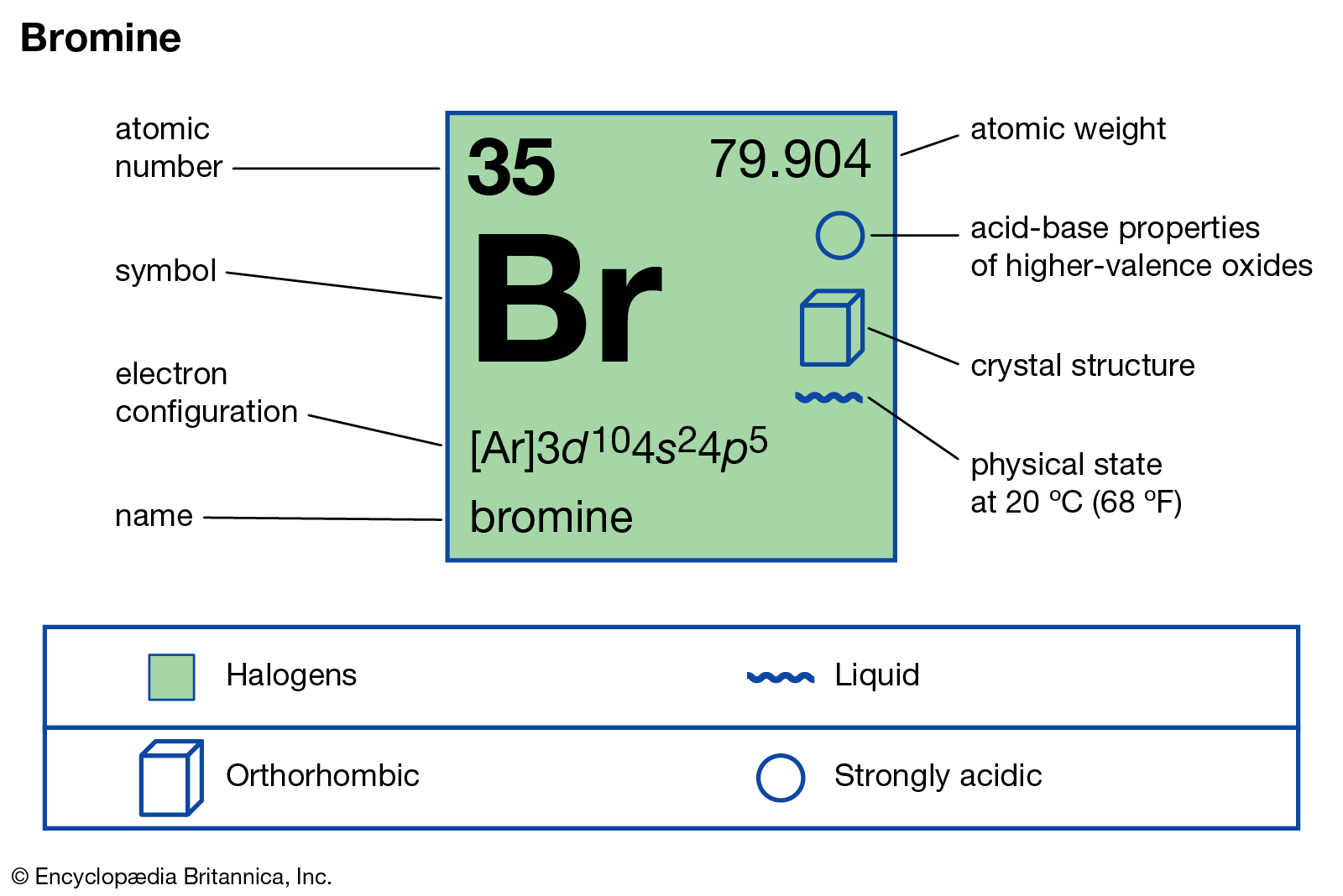
Atomic Number: 35
Bromine is the 35th element in the periodic table. It is part of the halogen group consiting of fluorine, chlorine, bromine, iodine, and astatine. It is a brown-red liquid at room temperature, that when evaporated, is to form a similarly coloured gas. It has properties similar to chlorine and iodine. Bromine is dangerouus to the human body and can damage almost every major organ. Bromine is quite special because it is one of 2 elements (the other being mercury) that is in liquid form at room temperature. Bromine is sometimes used as a replacement from chlorine. It can be disinfectant for swimming pools and spas. This element is found in the earth's crust and in seawater in various chemical forms. The man that discovered bromine was Antoine-Jérôme Balard. It was discovered while investigating some salty water from Montpellier, France in 1826.
|
|