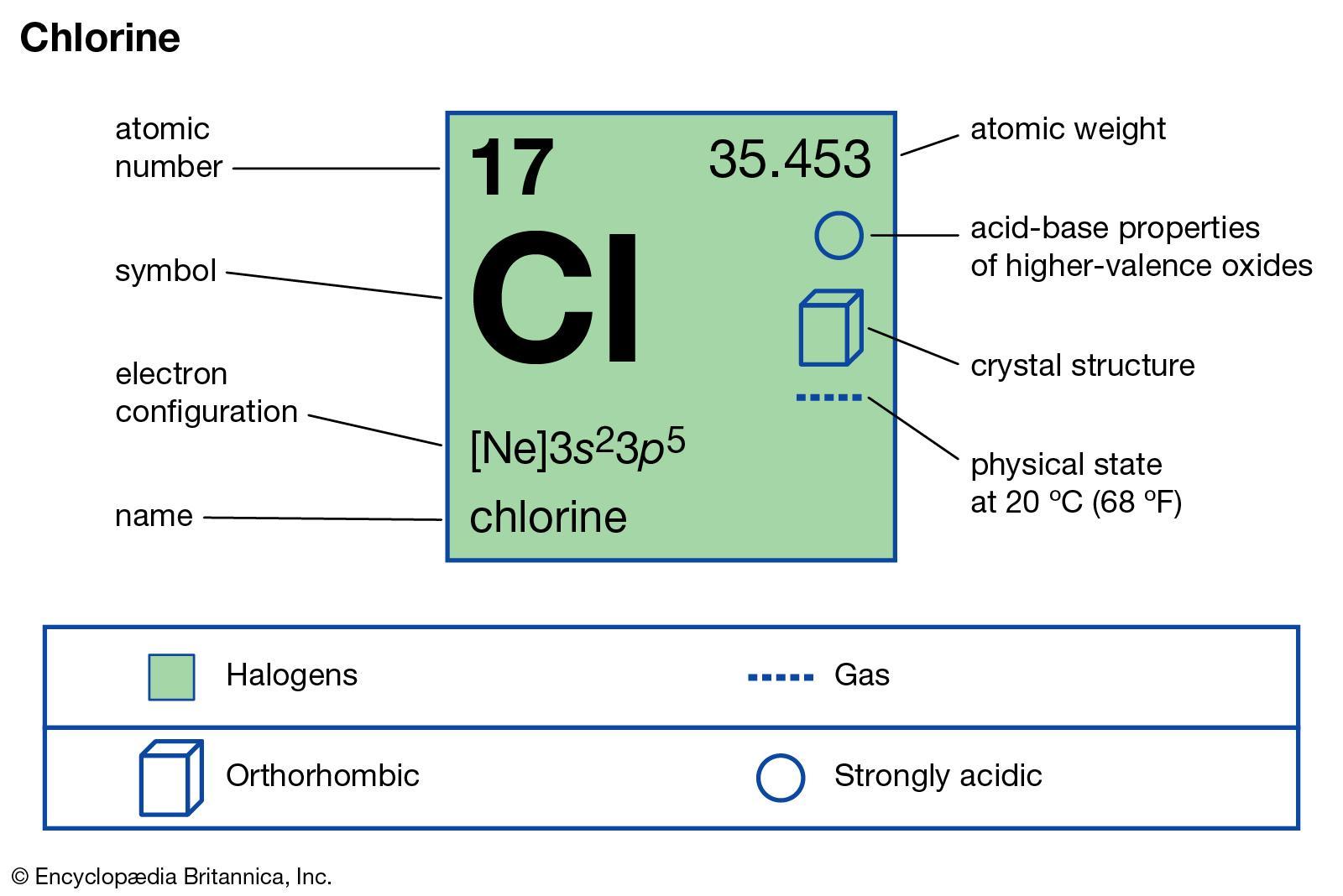
Chlorine
Atomic Number: 17
Chlorine is the 17th element in the periodic table and it is part of the reactive non-metals. It is the second lightest of the halogens. At room temperature chlorine is a yellow-green gas. It's one of the most common substances on Earth, but pure chlorine is rare. Chlorine's main purpose is to kill bacteria which is why it is used to treat drinking water and used in swimming pools. This element on it's own is very dangerous though, it can be bad when inhaling it. Chlorine is mostly only found with other elements combined, for example in salt (NaCl) but also in carnallite, and sylvite. Chlorine has 24 known isotopes, but 75% of chlorine is chlorine-35 and 24% of clorine is clorine-37. The person that discovered chlorine is Swiss-German chemist, Carl Wilhelm Scheele in 1774. The name chlorine is derived from "chloros", meaning green, referring to the color of the gas which was greenish-yellow.
|
|