Magnesium
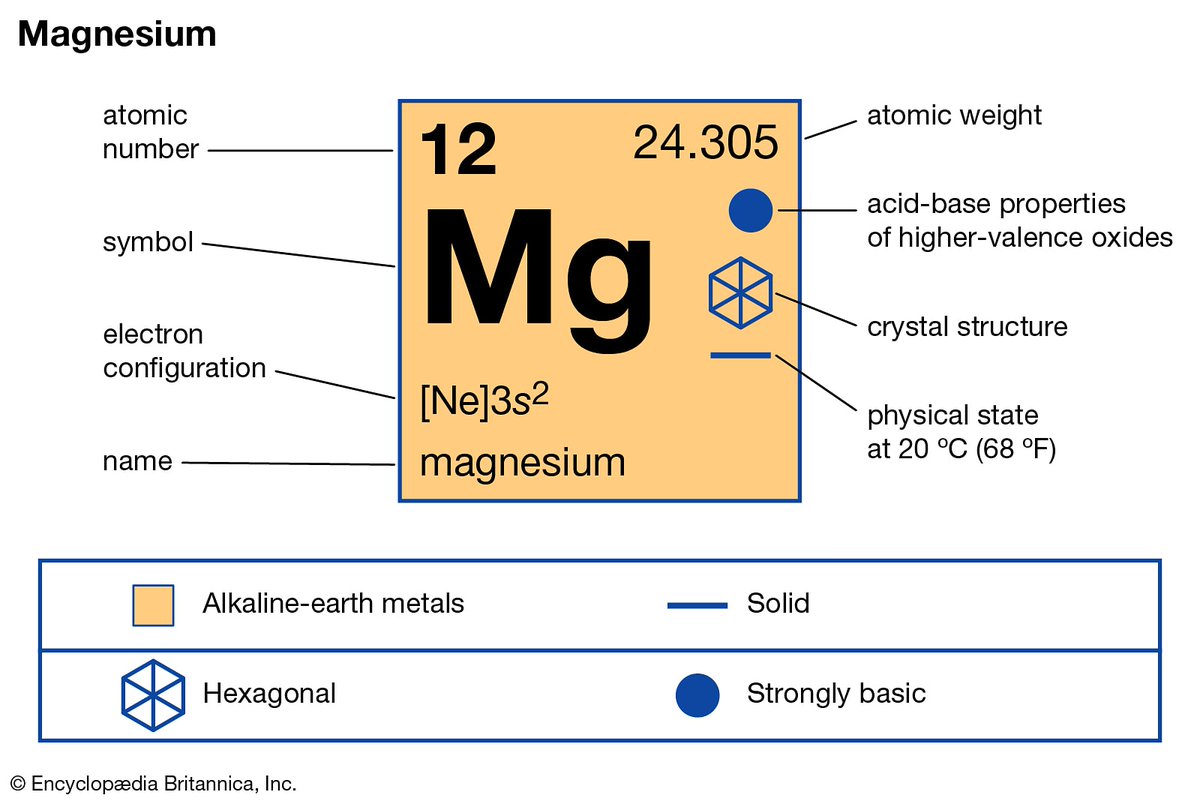
Atomic Number: 12
Magnesium is the 12th element in the periodic table, and it is a shiny gray solid. This metal is part of the alkaline earth metals, which are a group of 6 elements. Magnesium is the ninth most abundant element in the universe, and the fourth most common on Earth. Magnesium is mostly found under ground in combination with different elements. The source of magnesium can be from sea water or ores such as, dolomite, magnesite, and carnallite. Magnesium is also highly flammable, and can be extremely dangerous. It can be found in all kinds of foods as well, such as almonds spinach or different seeds. The two people that discovered magnesium were Humphry Davy and Joseph Black in 1755. The name magnesium comes from "Magnesia", a district in Greece, where a magnesium containing mineral was found.
|
|