Tennessine
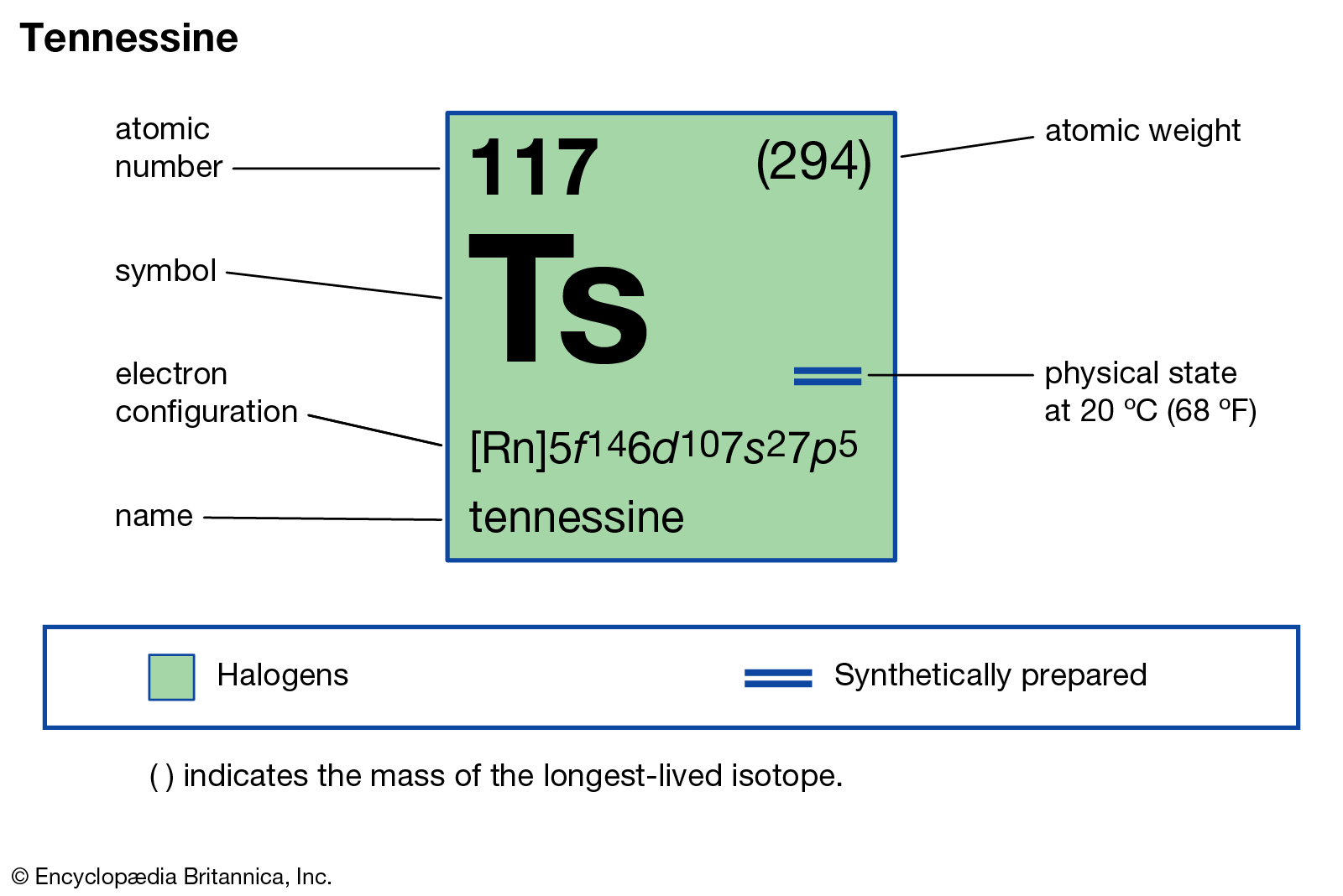
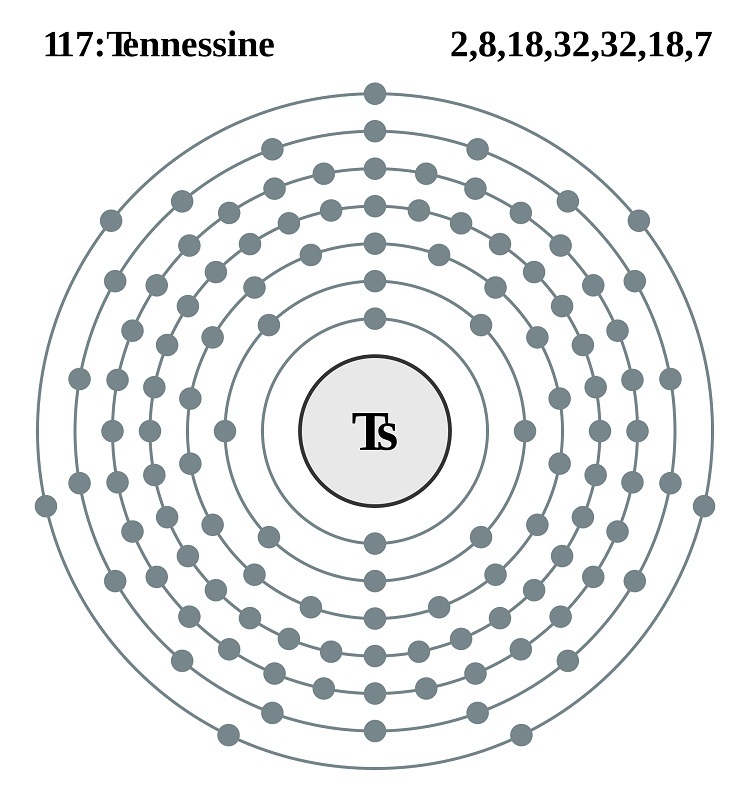
Atomic Number: 117 Tennessine is the second last known element in the periodic table and it is estimated to be a post-transition metal. There is not much known about tennessine, for example, scientists don't even know what it looks like. It is predicted to be a halogen and a solid. There is no use for tennessine other than research. There are only two isotopes of this element, tennessine-293 and 294. The most stable isotope is tennessine-294 has a half-life of about 80 milliseconds. It decays through alpha decay (the release of alpha particles). Tennessine was made by the fusion of calcium-48 and berkelium-249. Calcium ions were formed into a beam in a cyclotron (a particle accelerator) and fired at a layer of berkelium. Three different teams from around the world discovered this element. Scientists from the Joint Institute for Nuclear Research in Dubna, Russia, the Lawrence Livermore National Laboratory in California, USA, and Oak Ridge National Laboratory in Tennessee, USA. Each of these teams contributed to this discovery. The first atoms were made in April 5, 2010. This element was named after the US state, Tennessee, where the Oak Ridge National Laboratory is located. |
|