Livermorium
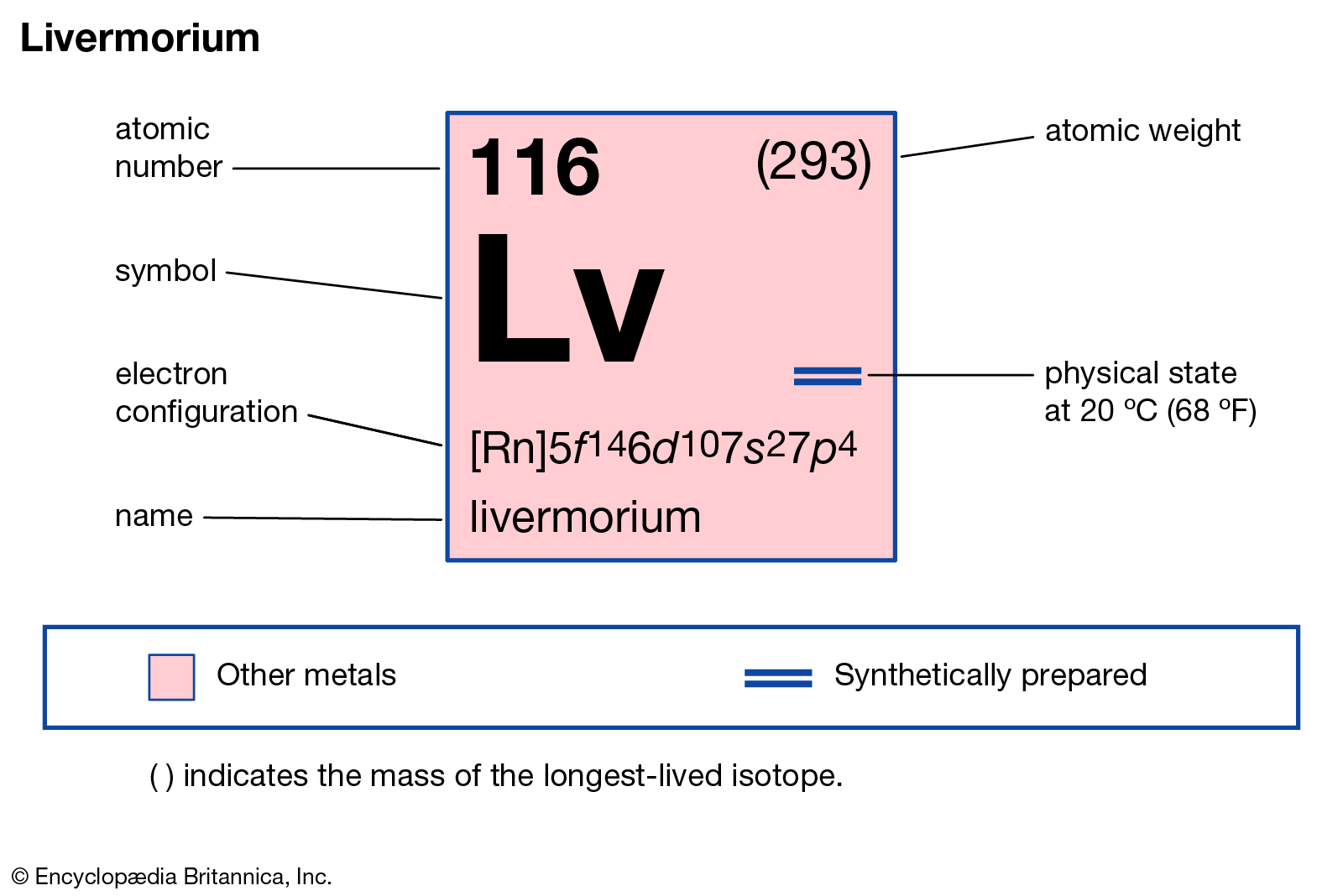
Atomic Number: 116
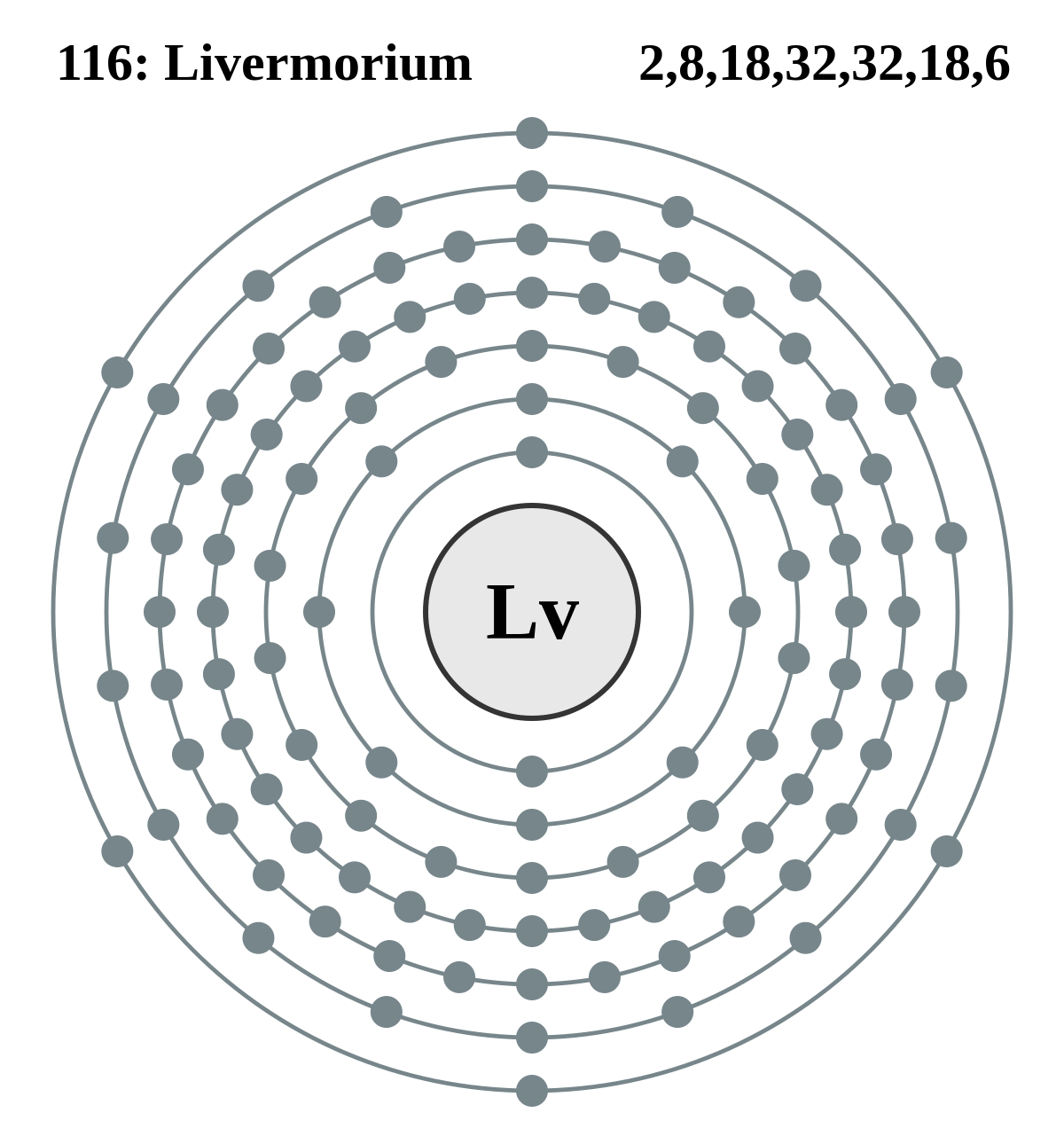
Livermorium is the 116th element and it is the third last element known at the moment. It is considered to be a post-transition metal, but scientists are only predicting this. There is little known about this element so it is only predicted to be a solid. It is also predicted to have a silvery white color. Livermorium has four isotopes, all of them decay through alpha decay (the release of alpha particles). All of the isotopes are radioactive and unstable. Livermorium's most stable isotope, livermorium-293, has a half-life of about 53 milliseconds. It decays into flerovium-289. Livermorium does not occur naturally. It is made by bombarding curium atoms with calcium ions. Livermorium was discovered by the Lawrence Livermore National Laboratory in California and the Joint Institute for Nuclear Research in Dubna, Russia in July 2000. This element was named after the Lawrence Livermore Lab which was one of the lab teams that collaborated with the discovery. |
|