Nihonium
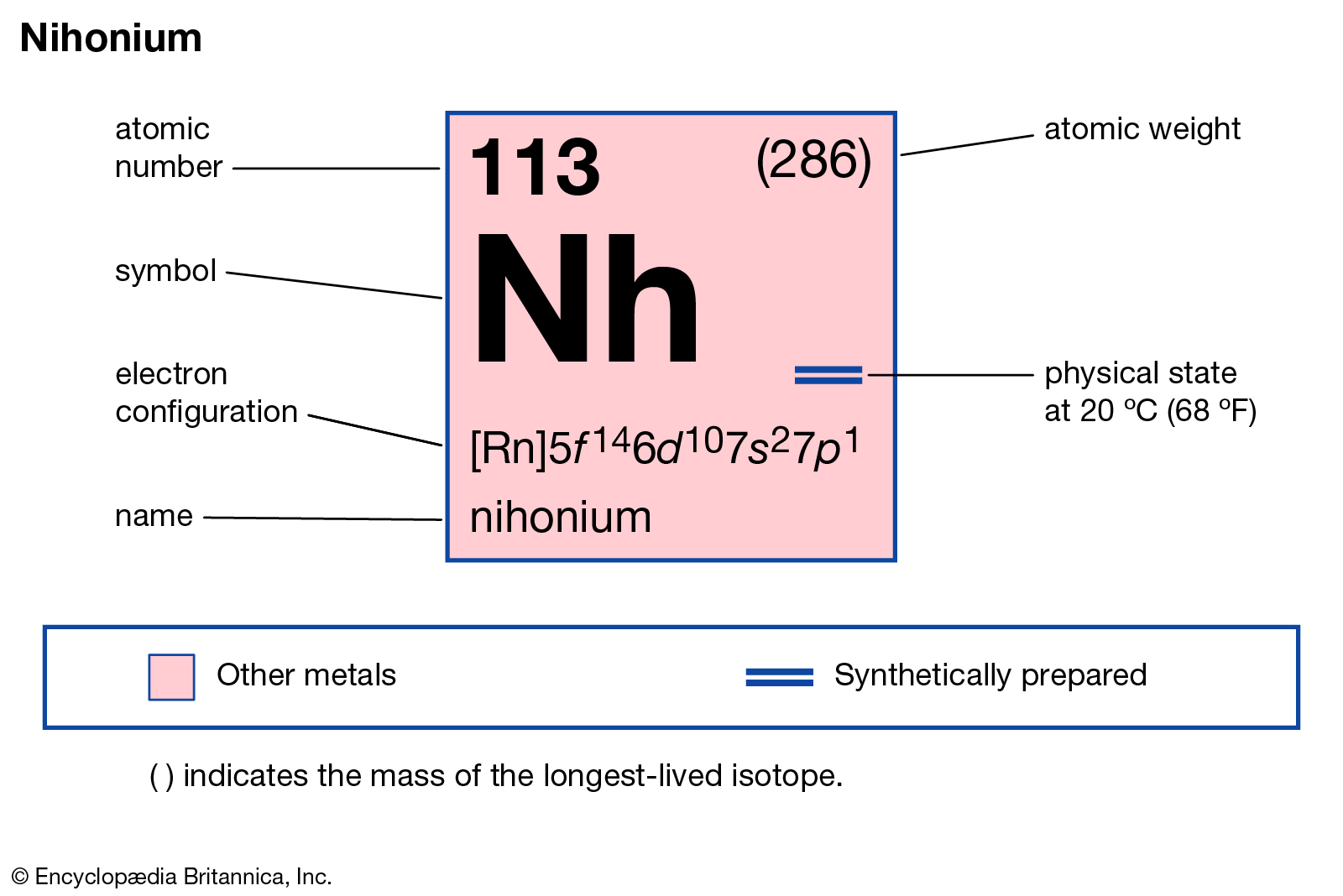
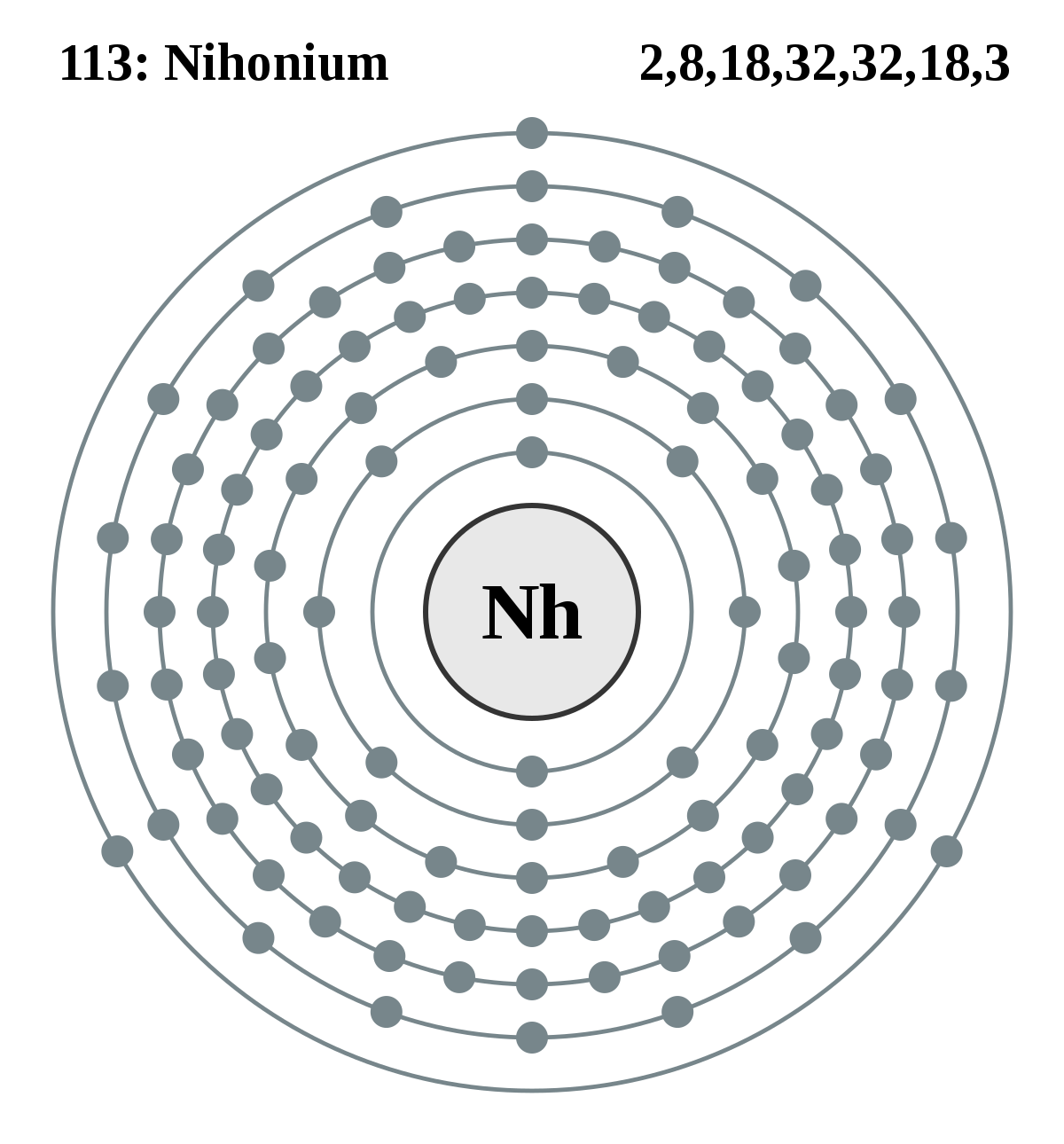
Atomic Number: 113
Nihonium is the 113th element and it is predicted to be a post-transition metal. It is also expected to be a solid at room temperature, but it has an unknown appearence. Only of few atoms of this element have ever been made, so nobody knows exactly what it's properties are. Though, people think that it might have a silvery-gray color. It was called ununtrium before it was given a real name because in latin "ununtrium" means one-one-three. There are five known isotopes, it's most stable known isotope, nihonium-286, has a half-life of about 10 seconds. All of the isotopes are radioactive and unstable. It decays into roentgenium-282 through alpha decay (the release of alpha particles). This element doesn't have any use other than research. This element is not a natural element and is artificially made. To produce nihonium, moscovium (element 115) must first be made. To make moscovium atoms of americium are bombarded with ions of calcium in a cyclotron. Then after moscovium is made, it will alpha decay quickly into the new element, nihonium. Nihonium was discovered on August 12, 2012 by a team called RIKEN led by Kosuke Morita's in Japan. Nihon is a way to say the country's name in Japanese, to represent where this element was discovered. |
|