Nobelium
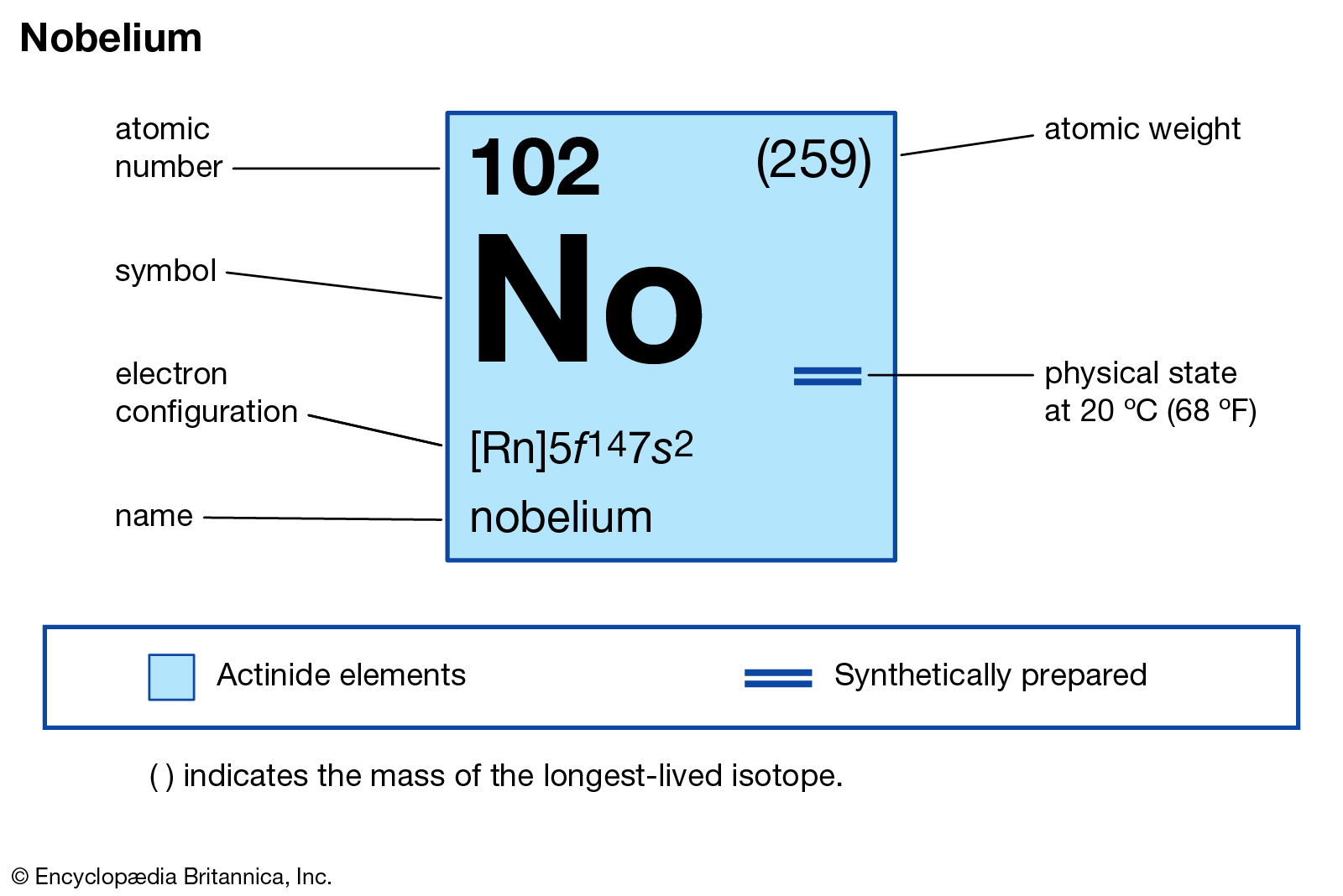
Atomic Number: 102
Nobelium is the 102nd element in the periodic table and it is the 2nd last actinide in the actinide family. It is a radioactive metal and is the tenth transuranic element. Nobelium has no uses outside research and it has no known biological role. It is an artificial element so it is made by bombarding curium with carbon in a device called a cyclotron. The cyclotron is a machine that is a type of particle accelerator. Nobelium is so rare that nobody knows how it looks like. It is predicted to be a silvery-white or pale grey solid at room temperature. In 1957, a group of scientists working at the Nobel Institute of Physics in Stockhlom, Sweden, announced the discovery of nobelium. Though, in April 1958 in Berkeley, California Glenn Seaborg discovered it as well. Nobelium is named after Alfred Nobel, the inventor of dynamite. |
|